Facebook
 X
X
 Pinterest
 Copy Link
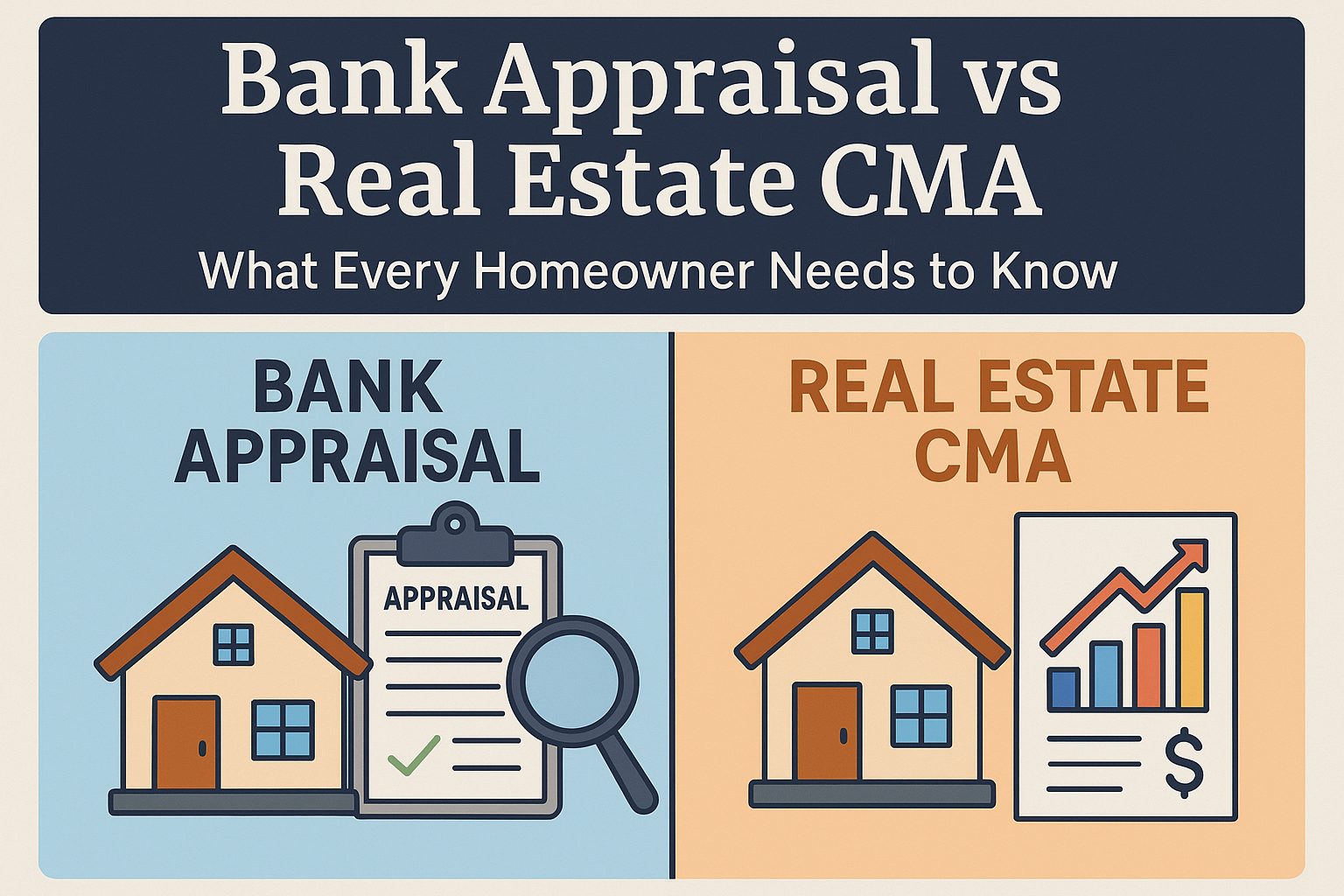
Bank Appraisal vs Real Estate CMA in Nova Scotia: Complete Guide for Homeowners
By Rob Lough | Broker/Owner – Century 21 Optimum Realty | Halifax-Dartmouth, Nova Scotia
When buying, selling, or refinancing property in Nova Scotia, you’ll encounter two very different property valuation tools: the bank appraisal and the Comparative Market Analysis (CMA). They may sound similar, but they serve completely different purposes — and confusing the two can cost you time, money, and negotiating power. Whether you’re in Halifax, Dartmouth, Truro, or anywhere across the province, understanding how each works will make you a sharper buyer, seller, or borrower in the Nova Scotia market.
What Is a Bank Appraisal in Nova Scotia?
A bank appraisal is a formal, legally recognized property valuation carried out by a licensed appraiser registered with the Appraisal Institute of Canada (AIC). Canadian lenders — from RBC and TD to local credit unions — require these assessments before approving a mortgage or refinance to confirm the property serves as adequate collateral for the loan amount.
Before your lender orders an appraisal, most buyers have already gone through the mortgage pre-approval stage. If you haven’t done that yet, it’s worth understanding what lenders are looking at long before the appraisal comes into play.
Learn more: Get Pre-Approved for a Nova Scotia Mortgage
Key Features of a Nova Scotia Bank Appraisal
Licensed professionals only. Only AIC-certified appraisers can produce a bank appraisal in Nova Scotia. These professionals are trained to evaluate Atlantic Canadian property conditions — including coastal proximity, heating systems, energy efficiency upgrades, and seasonal factors unique to Maritime real estate.
Comprehensive on-site assessment. The appraiser physically inspects the property, documenting everything from foundation condition to recent renovations. They look at comparable MLS sales in the immediate area to support their valuation.
Conservative by design. Bank appraisals are intentionally conservative. A lender’s goal is to protect itself, so the appraised value may come in below what buyers and sellers are expecting — especially in a fast-moving market like Halifax-Dartmouth.
Regulatory compliance. Nova Scotia appraisals must meet Canadian Uniform Standards of Professional Appraisal Practice (CUSPAP) guidelines and comply with provincial real estate regulations.
When Bank Appraisals Are Required in Nova Scotia
- Mortgage applications through Canadian banks and credit unions
- Refinancing an existing property or accessing a HELOC
- Estate planning and probate see: What Happens to a House When Someone Dies in Nova Scotia
- Property tax appeals with Nova Scotia Assessment (PVSC)
- Legal proceedings involving property value disputes
What Is a Real Estate CMA in Nova Scotia?
A Comparative Market Analysis (CMA) is an informal property valuation prepared by a licensed Nova Scotia REALTOR®, at no cost to you, to help determine the most competitive listing price for your property. CMAs draw on live MLS data from recent sales across Halifax Regional Municipality, HRM suburbs, Cape Breton, Truro, and other local markets.
Thinking about selling? Before you list, getting a professional CMA is the first step toward pricing your home correctly. You can also request a free home valuation from Rob Lough to see where your property stands in today’s market.
Key Features of a Nova Scotia Real Estate CMA
Current market intelligence. A skilled Nova Scotia REALTOR® understands local dynamics that no automated tool can replicate: spring vs. fall demand in HRM, the difference in buyer behaviour in Bedford vs. Dartmouth, or why a property in Truro may attract different buyers than one in the Annapolis Valley.
Full MLS access. Agents access comprehensive local MLS data — recent sales in Halifax, Dartmouth, Bedford, Cole Harbour, Truro, Sydney, New Glasgow, and across Atlantic Canada, to benchmark your property accurately.
Strategic pricing advice. A CMA isn’t just a number — it’s a pricing strategy. Your agent will factor in list-to-sale ratios, days on market, and current buyer demand to position your property for maximum interest.
No cost to you. CMAs are provided as a complimentary service by licensed REALTORS®. There is no obligation to list.
When CMAs Are Most Useful in Nova Scotia
- Setting a competitive listing price for your Halifax, Dartmouth, or Truro property
- Evaluating your home’s value before deciding whether to sell
- Understanding how your neighbourhood compares to others in HRM
- Planning for spring listing season — see the Spring 2026 Halifax Market Guide
- Pricing rural Nova Scotia or Cape Breton properties appropriately
Bank Appraisal vs CMA: Nova Scotia Side-by-Side
| Feature | Nova Scotia Bank Appraisal | Nova Scotia Real Estate CMA |
|---|---|---|
| Conducted by | AIC-licensed appraiser | NSREC-licensed REALTOR® |
| Primary purpose | Mortgage approval | Listing price strategy |
| Legal status | Legally binding | Informal market estimate |
| Cost | $400–$800 CAD | Free to Nova Scotia sellers |
| Timeframe | 1–2 weeks | 1–3 days |
| Market approach | Conservative — protects lender | Current market reality |
Understanding Nova Scotia Property Values in 2026
Both appraisals and CMAs depend on the same raw material: comparable sold properties. And right now, Nova Scotia’s market is giving mixed signals depending on location. HRM continues to show resilience while some outlying markets are cooling. Before you make any valuation decisions, it pays to understand where the market actually stands.
Read the latest numbers: Halifax-Dartmouth Real Estate Market Stats – February 2026.
HRM-Specific Factors That Affect Valuations
Properties in Halifax, Dartmouth, Bedford, and the surrounding HRM benefit from proximity to Halifax Stanfield International Airport, major universities (Dalhousie, Saint Mary’s, NSCAD), the downtown business district, and the harbour waterfront. These factors matter to both appraisers and agents — but they’re weighted differently depending on the purpose of the valuation.
Seasonal patterns also matter. Spring and early summer typically bring the strongest buyer demand in Atlantic Canada, which can create a gap between what an appraiser records (based on historical sales) and what a REALTOR® anticipates in a live competitive market.
Nova Scotia Regulatory Considerations
Property Transfer Tax and Closing Costs
Nova Scotia charges a Deed Transfer Tax (DTT) on most property transactions, calculated based on the purchase price or assessed value — whichever is higher. In Halifax Regional Municipality, that rate is 1.5%, so a $500,000 purchase adds $7,500 to your closing costs. DTT is just one of several expenses buyers need to plan for.
Get the full picture: Closing Costs When Buying in Nova Scotia.
Nova Scotia Property Assessment (PVSC)
It’s important not to confuse a bank appraisal or a CMA with your Nova Scotia property assessment. The Property Valuation Services Corporation (PVSC) uses mass appraisal techniques to assess property values province-wide for taxation purposes. These assessments don’t reflect real-time market conditions the way a CMA does, and they’re not the same as a bank appraisal.
Nova Scotia’s 2026 assessment roll crossed $206.3 billion an 8% increase over the prior year. If you’ve received your notice and are wondering how it affects your tax bill, or whether you qualify for the Capped Assessment Program (CAP), this article explains it all: Nova Scotia Passes the $200B Mark: What Rising Assessments Really Mean for Homeowners.
For a deeper look at how property taxes are calculated across Nova Scotia municipalities: Property Taxes in Nova Scotia – Complete Guide.
Tips for Nova Scotia Homeowners
Before Getting a Bank Appraisal
- Complete any deferred maintenance — appraisers document condition, and issues reduce value
- Document recent renovations, energy efficiency upgrades, and new systems (especially heat pumps, which are highly valued in Nova Scotia)
- Note any coastal or waterfront features that could affect value positively
- Research recent comparable sales in your area so you can discuss them with the appraiser
When Requesting a Nova Scotia CMA
- Work with an agent who has hands-on experience in your specific community — Halifax condo pricing and rural East Hants pricing require different expertise
- Ask about seasonal timing recommendations for Atlantic Canada — listing in late February vs. late April can meaningfully impact your final sale price
- Read: How to Price Your Home to Sell in Halifax – Why the First Week Matters Most
- Ask your agent to walk you through the specific comparables they’re using — not just the bottom line number
- Get your free home valuation: Request a Free Home Valuation from Rob Lough
Get Expert Real Estate Guidance for Nova Scotia
Whether you need to understand what your home is worth before listing, or you’re navigating the mortgage process and wondering how an appraisal could affect your financing, I’m here to help. With over 24 years of experience across Halifax, Dartmouth, HRM, East Hants, and Truro — and a background as a licensed Home Inspector — I bring a level of property knowledge that goes well beyond the average real estate conversation.
Rob Lough | Broker/Owner/REALTOR®
Century 21 Optimum Realty📱 902-880-8595✉️ rob.lough@century21.ca
Related Resources
- Free Home Valuation – roblough.c21.ca
- How to Price Your Home to Sell in Halifax
- Get Pre-Approved for a Nova Scotia Mortgage
- Closing Costs When Buying in Nova Scotia
- Halifax-Dartmouth Real Estate Market Stats – February 2026
- Spring 2026 in Halifax – What Buyers and Sellers Need to Know
- Nova Scotia Passes the $200B Mark: What Rising Assessments Mean for Homeowners
- Property Taxes in Nova Scotia
- What Happens to a House When Someone Dies in Nova Scotia