Facebook
 X
X
 Pinterest
 Copy Link
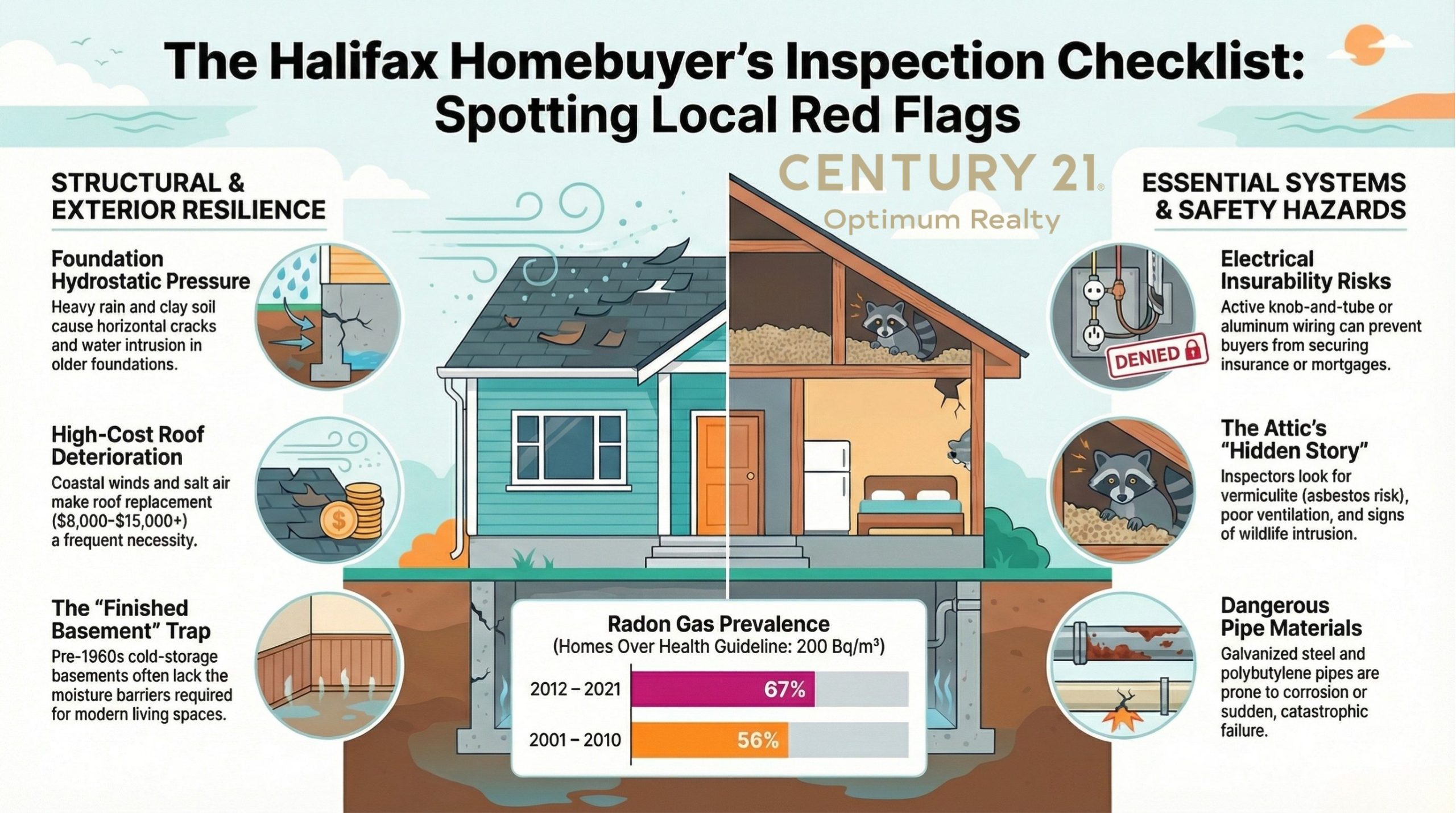
What a Home Inspector Looks for in Halifax Houses
By Rob Lough, Broker/Owner | Century 21 Optimum Realty | Halifax-Dartmouth, Nova Scotia
I spent five years as a home inspector in Halifax before moving into real estate full-time. I have crawled through hundreds of Halifax basements, balanced on attic joists in century-old South End homes, and pulled back enough insulation to know exactly where this city’s houses hide their problems.
Halifax is not like other markets. Our coastal climate, aging housing stock, and unique geology create a very specific set of issues that show up on inspection reports again and again. If you are buying a home here, you need to understand what an inspector is trained to find and why certain defects matter more in Halifax than almost anywhere else in Canada.
This is the guide I wish every one of my buyers had before their inspection day.
The Foundation: Where Most Halifax Problems Start
The foundation is the first thing any experienced inspector examines, and in Halifax it is often the most revealing.
Nova Scotia has a relatively high share of homes built before 1960. Many older Halifax properties sit on stone or poured concrete foundations that were never designed for the finished basements homeowners expect today. Over decades, these foundations develop cracks, and Halifax’s heavy rainfall combined with clay-heavy soil creates hydrostatic pressure that pushes water through every gap.
Here is what an inspector checks:
Cracks in foundation walls and basement floors. Hairline cracks may be cosmetic. Horizontal cracks or stair-step cracks in block foundations signal structural movement and need an engineer’s assessment.
Signs of water intrusion. Efflorescence (white powdery deposits) on basement walls is a telltale sign that water has been migrating through the concrete. Staining on drywall, musty odours, and active moisture are all red flags.
Grading and drainage around the home. The ground should slope away from the foundation on all sides. In Halifax, poor lot grading is one of the most common and most fixable causes of wet basements.
Sump pump condition. If the home has a sump pump, the inspector tests it. If it does not have one but probably should, that gets noted.
Many older Halifax homes have basements that were originally cold storage and were never intended to be living space. When you see a “finished basement” in a pre-1960s home, a good inspector looks extra carefully at how that renovation was done, particularly whether moisture barriers and proper drainage were installed.
The Roof: Halifax Weather Takes Its Toll
Halifax’s combination of coastal wind, freeze-thaw cycles, salt air, and heavy precipitation is brutal on roofing systems. An inspector spends significant time evaluating the roof because replacement costs typically run $8,000 to $15,000 or more.
Inspectors look for:
Missing, curled, or cracked shingles. Wind damage is especially common on homes exposed to the harbour or open areas.
Condition of flashing. Flashing around chimneys, vents, and roof-to-wall transitions is a common failure point. When it fails, water gets in.
Gutter and downspout function. Gutters must direct water at least three feet from the foundation. Clogged or disconnected downspouts cause basement issues on the next rainy day.
Roof ventilation. Inadequate attic ventilation in Halifax causes ice damming in winter, which leads to water damage inside the home.
Moss and algae growth. Shaded roofs in Halifax’s humid climate grow moss that holds moisture against the shingles, accelerating deterioration.
Coastal exposure matters. A roof in downtown Dartmouth facing the harbour may age faster than the same shingles on a sheltered lot in Clayton Park. An experienced inspector factors in the home’s exposure when assessing remaining roof life.
Electrical Systems: The Deal-Breaker
Electrical issues are among the most common deal-killers in Halifax real estate transactions, and for good reason: they directly affect insurability.
Knob-and-tube wiring. Common in Halifax homes built before the mid-1940s, knob-and-tube wiring is a significant concern. Most insurance companies in Nova Scotia will not provide coverage for homes with active knob-and-tube wiring, which means buyers may not be able to get a mortgage.
Aluminum wiring. Found in homes built from 1970-1975, aluminum wiring requires special outlets and switches rated for aluminum. Improper connections create fire hazards at junction points.
Electrical panel condition. The inspector checks for overloaded breaker panels, double-tapped breakers, and Federal Pacific or Zinsco panels, both known for failure to trip during overloads.
GFCI protection. Ground fault circuit interrupters are required near water sources: kitchens, bathrooms, exterior outlets, and garages. Older Halifax homes frequently lack them.
Exposed or DIY wiring. Improper electrical work is surprisingly common in older Halifax homes, particularly in basements and attics where homeowners have made their own modifications over the decades.
If you are looking at a pre-1950s home in areas like the South End, North End, or Dartmouth’s older neighbourhoods, budget for the possibility of electrical upgrades. An inspector will test outlets with a circuit analyzer to detect open grounds, reverse polarity, and the presence of knob-and-tube behind the walls, even where the wiring is not visible.
Plumbing: What Is Behind the Walls
Pipe materials. Galvanized steel pipes (common in pre-1970s Halifax homes) corrode from the inside and restrict water flow. Polybutylene pipes (installed from the late 1970s through the 1990s) are prone to sudden failure and have been the subject of class-action lawsuits.
Water pressure and flow. The inspector runs multiple fixtures simultaneously to test real-world water pressure.
Drain function. Slow drains can indicate root intrusion, collapsed lines, or blockages in the main sewer or septic connection.
Water heater age and condition. Most tank water heaters last 8 to 12 years. The inspector checks the manufacture date, looks for rust or corrosion, and tests the pressure relief valve.
Many older Halifax homes were originally on septic systems that were later connected to municipal sewer. If a home is still on septic, a separate time-of-sale septic inspection is strongly recommended, one that includes pumping the tank and examining the leaching bed.
HVAC: Heating Is Non-Negotiable in Halifax
With Halifax winters regularly dropping below minus 10 degrees Celsius, a reliable heating system is essential.
Furnace or boiler age and condition. A furnace and/or older than 20 years is nearing the end of its useful life. The inspector checks for proper venting, and signs of carbon monoxide risk.
Heat pump performance. Heat pumps have become extremely popular in Halifax. The inspector checks refrigerant lines, outdoor unit condition, and whether the system is properly sized for the home.
HRV (Heat Recovery Ventilator). Newer Halifax homes typically have HRVs. The inspector checks that these are functioning and properly maintained, as they play a key role in managing indoor air quality and humidity.
Many Halifax homeowners have layered heating systems, perhaps an oil furnace, a wood stove, and a mini-split heat pump all in the same house. An inspector evaluates each system individually and looks at how they interact, including whether wood stove installations meet clearance requirements from combustible materials.
Attic and Insulation: The Hidden Story
The attic tells an inspector more about a home’s history than almost any other space.
Insulation type and depth. Halifax homes should have a minimum of R-50 in the attic for adequate energy performance.
Vermiculite insulation. This is a significant concern in Halifax. Vermiculite, small grey-brown granules widely used as insulation, is often contaminated with asbestos from the Libby, Montana mine. According to Health Canada, if you have vermiculite insulation, you should assume it may contain asbestos and avoid disturbing it.
Ventilation and moisture. The inspector checks for soffit vents, ridge vents, or gable vents and looks for signs of condensation, frost, or mould on the underside of the roof sheathing.
Signs of wildlife. Raccoons, squirrels, and birds frequently access Halifax attics. Droppings, chewed wiring, and disturbed insulation are all noted.
Vermiculite is one of those findings that stops buyers in their tracks. Professional abatement is expensive. However, if the vermiculite is undisturbed and properly contained, it does not necessarily need to be removed immediately. An inspector’s job is to identify it and recommend appropriate next steps.
Radon: Halifax’s Invisible Risk
This is something most buyers never think about, but it is one of the most important health-related findings in a Halifax home inspection.
Health Canada data specifically for the Halifax region shows alarming numbers. Among homes built between 2012 and 2021, 67% had radon levels above the 200 Bq/m³ guideline, and 27% exceeded 600 Bq/m³, which is considered extremely high. Even among homes built between 2001 and 2010, 56% were above the guideline. Newer, more airtight construction may actually trap more radon indoors.
Radon is a naturally occurring radioactive gas produced by the decay of uranium in soil and rock. It enters homes through cracks in foundations, gaps around pipes, and sump pits. It is the second leading cause of lung cancer after smoking.
Radon testing is not typically included in a standard home inspection, but any good Halifax inspector will recommend it. A professional long-term radon test takes a minimum of 91 days, though short-term screening devices are available. Radon mitigation (a sub-slab depressurization system) typically costs $2,000 to $3,000 to install and is highly effective. If you are buying in Halifax, treat radon testing as essential, not optional.
Moisture and Mould: Halifax’s Constant Battle
Halifax’s coastal humidity, frequent rainfall, and older housing stock create ideal conditions for moisture problems and mould growth. An inspector looks for:
Active leaks around windows, ceilings, and pipes. Even small leaks cause significant damage over time.
Mould in attics, basements, and bathrooms. Black mould or any visible mould growth gets flagged. Inspectors look behind access panels and in crawl spaces.
Bathroom ventilation. Exhaust fans must vent to the exterior. Venting into the attic is a code violation and a leading cause of attic mould in Halifax.
Unlike newer homes that include mechanical ventilation systems and capillary breaks between foundations and the ground, older Halifax homes often lack these protections entirely. Concrete foundations in older properties can act like sponges, drawing ground moisture into basements.
What an Inspector Cannot Do
Understanding the limits of a home inspection is just as important as understanding what it covers:
Inspectors cannot open walls, ceilings, or floors. The inspection is visual and non-invasive. They cannot move furniture or stored items. They do not provide repair cost estimates. Inspections also do not cover everything: radon testing, mould air-quality testing, sewer camera scopes, and septic inspections are all separate services.
Choosing a Home Inspector in Halifax
One important thing to know: Nova Scotia does not regulate home inspectors. There is no mandatory licensing requirement for home inspectors in Nova Scotia. This means the quality of inspections can vary significantly.
When selecting an inspector, look for membership in a recognized association like CAHPI (Canadian Association of Home and Property Inspectors) or InterNACHI, confirmed Errors and Omissions insurance, experience with Halifax homes specifically, and a detailed sample report with photos and severity ratings.
What Happens After the Inspection
Once the inspection report is in hand, buyers have options: accept the property as-is, negotiate repairs or a price reduction, request that the seller address specific safety items before closing, or walk away if the issues are too significant.
As your REALTOR®️, I help you interpret the inspection report and determine which findings are legitimate negotiation points and which are normal wear and tear for a Halifax home of that age. Not every finding is a reason to panic, but some absolutely are reasons to renegotiate or reconsider.
Before you even get to inspection day, make sure your financing is in order. Understanding your closing costs when buying in Nova Scotia matters, because a major inspection finding can change your numbers significantly. And if you are just getting started with the buying process in 2026, the Spring 2026 Halifax buying guide covers what the current market means for buyers right now.
Frequently Asked Questions: Home Inspections in Halifax
How much does a home inspection cost in Halifax? Most home inspections in Halifax range from $450 to $650 for a standard single-family home. Larger homes, older properties, or those requiring additional testing (radon, mould, septic) will cost more. It is one of the best investments you can make in the buying process.
How long does a home inspection take? A thorough inspection of a typical Halifax home takes two to three hours. Larger or older homes with more systems to evaluate can take four hours or more. Plan to attend the full inspection if you can.
Do I need to be present for the home inspection? You are not required to be there, but you absolutely should be. Walking through the home with the inspector gives you the chance to ask questions in real time, see issues firsthand, and leave with a much clearer understanding of the property than the written report alone provides.
Can a home fail a home inspection in Nova Scotia? No. A home inspection is not a pass/fail evaluation. The inspector’s job is to document the condition of the home, identify deficiencies, and note items that need attention. What you do with that information is up to you and your Realtor.
Is a home inspection required to buy a house in Nova Scotia? It is not legally required, but it is strongly recommended. In competitive markets, some buyers have waived inspection conditions to win bidding wars. That is a significant risk in a city like Halifax where older homes frequently have hidden issues. Skipping an inspection to win an offer can cost far more than it saves.
What is the difference between a home inspection and an appraisal? A home inspection evaluates the physical condition of the property. A bank appraisal determines the market value of the property for lending purposes. They serve completely different functions and are conducted by different professionals. Your lender orders the appraisal; you hire the home inspector.
Should I get a radon test done at the same time as the inspection? Yes, if at all possible. While most inspectors do not include radon testing as part of a standard inspection, many will arrange it or refer you to a certified radon professional. Given Halifax’s alarming radon statistics, booking both at the same time makes sense. A long-term radon test requires a minimum of 91 days, so the sooner you start, the better.
What happens if the inspection finds major problems? You have options. You can negotiate a price reduction, ask the seller to make repairs before closing, request a credit at closing, or walk away entirely if your offer included an inspection condition. This is where having an experienced Realtor in your corner matters. Not every deficiency is a deal-breaker, but some absolutely should be.
The Bottom Line
A home inspection is not about finding a “perfect” house. No home is perfect, especially in a city where many houses are 60, 80, or even 100+ years old. The inspection is about knowing exactly what you are buying and making informed decisions about price, repairs, and risk.
If you are buying in Halifax, treat the home inspection as one of the most important steps in your purchase. Attend the inspection if you can, ask questions, and read the full report carefully.
And if you want a REALTOR®️ who understands home inspections from the inside, because I have done hundreds of them, contact me directly. I will make sure you know exactly what you are walking into before you sign.
Rob Lough Broker/Owner | Century 21 Optimum Realty (902) 880-8595 | rob.lough@century21.ca | roblough.c21.ca
Related Resources