Facebook
 X
X
 Pinterest
 Copy Link
Nova Scotia Bedroom Egress Window Standards: A Complete 2025 Compliance Guide
By Rob Lough, Broker/Owner | Century 21 Optimum Realty | Halifax-Dartmouth, Nova Scotia
Bedroom safety regulations in Nova Scotia have evolved significantly, with the latest egress window standards now in full effect as of April 1, 2025. Whether you are a homeowner planning a basement renovation, a buyer evaluating a potential purchase, or a contractor managing residential projects, understanding these requirements is essential for occupant safety, insurance coverage, and protecting your property’s value.
Understanding Egress Windows: More Than Just Building Code Compliance
Egress windows function as emergency exits when traditional escape routes become inaccessible during fires, medical emergencies, or other critical situations. These specially sized windows allow occupants and first responders to enter or exit bedrooms safely without tools or specialized knowledge.
The significance of proper egress windows extends well beyond regulatory compliance. Homes with non-compliant bedroom windows face potential insurance coverage issues, reduced marketability, and legal restrictions on how rooms can be advertised and used. In Nova Scotia’s current real estate market, egress compliance has become a key consideration during home inspections and property valuations. As someone who spent five years conducting professional home inspections before moving into real estate full time, I can tell you this issue comes up far more often than buyers and sellers expect. Egress windows are one of several things an inspector evaluates closely — my article on what a home inspector looks for in Halifax houses covers the full list of what gets flagged during a typical inspection in HRM.
If you are thinking about what your home is worth in today’s market, a free home valuation is a good starting point before committing to any renovation work.
Breaking Down the 2025 Egress Window Standards
Nova Scotia’s building code establishes precise specifications that all bedroom egress windows must meet.
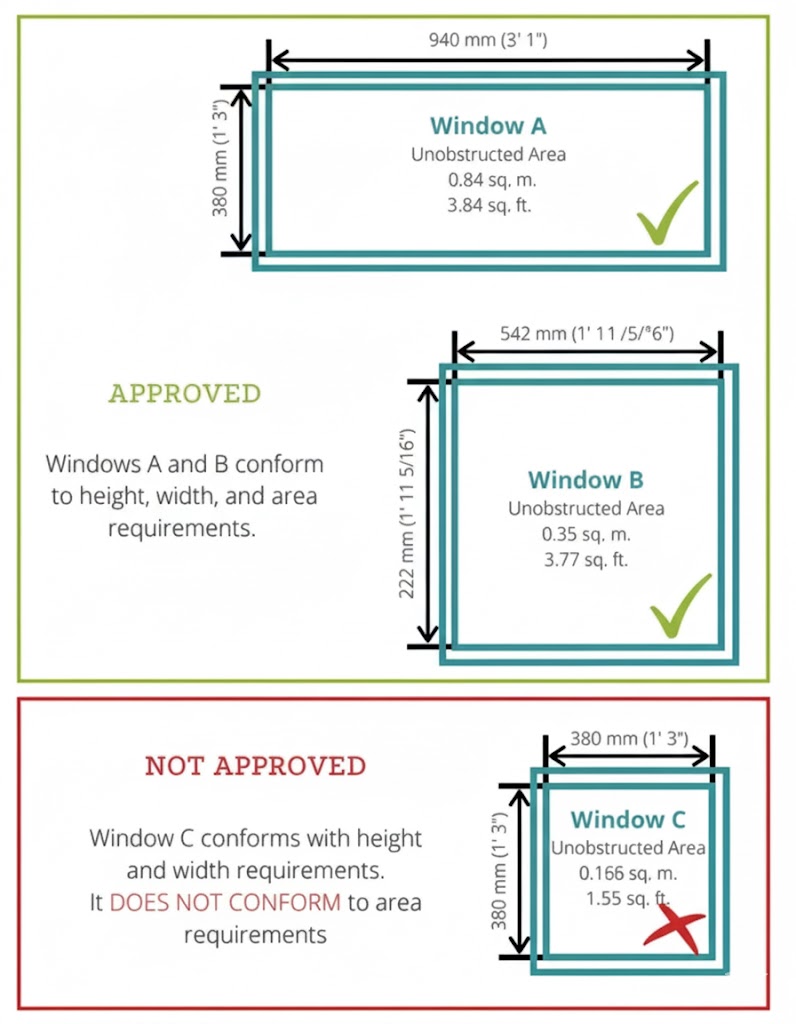
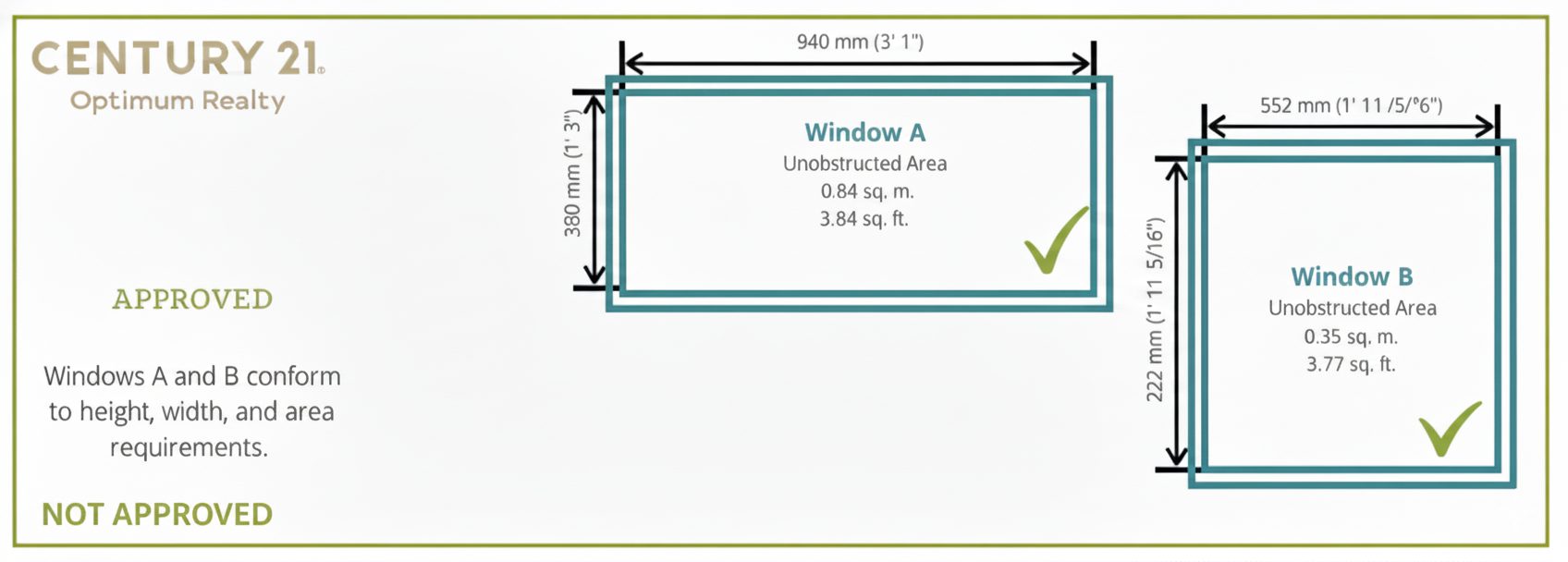
Fundamental Size Standards: Every bedroom must include at least one egress window or a door providing direct exterior access. The window must deliver an unobstructed opening of no less than 0.35 square metres (approximately 3.77 square feet). Neither the width nor height of the opening can measure less than 380 millimetres (15 inches).
A common misconception involves windows measuring exactly 380 mm on each side. While these dimensions technically meet the individual measurement requirement, the resulting area of only 0.14 square metres falls well short of the mandatory 0.35 square metre minimum. Practical compliance typically requires configurations closer to 550 mm by 650 mm or larger.
Enhanced Standards for Complex Layouts: Bedrooms positioned above or below separate dwelling units, or those requiring occupants to traverse multiple floors to reach an exit, must meet more rigorous specifications. These include a minimum window height of 1 metre, a minimum width of 550 millimetres, and sills positioned no more than 1 metre above the interior floor level.
Basement Bedroom Window Wells: Critical Safety Considerations
Basement bedrooms represent one of the most common egress compliance challenges in Nova Scotia homes. Because these windows sit below grade, they require protective window wells with specific dimensional and operational standards.
The building code mandates a minimum clearance of 760 millimetres (30 inches) extending outward from the window opening. This zone must remain completely unobstructed even when the window is fully open. For windows that swing outward, the well must extend at least 760 mm beyond the window’s maximum opened position.
Window well covers, grates, or enclosures require careful consideration. While these features protect against weather and debris, they must be operable from inside the dwelling without any tools, keys, or specialized knowledge. Many homeowners also add ladders or steps within deeper window wells. While not always legally mandated, these features significantly improve practical egress capability and are viewed favourably during inspections.
It is worth noting that basement egress windows are rarely the only compliance issue found in finished basement spaces. Moisture barriers, electrical work, and heating connections are all areas inspectors scrutinize carefully. If you are buying a home with a finished basement, my guide on what a home inspector looks for in Halifax houses explains exactly what gets reviewed beyond the windows themselves.
Navigating Egress Requirements in Existing Properties
One of the most frequently asked questions involves how egress standards apply to older Nova Scotia homes built before current codes took effect.
Grandfathering Protections: Properties constructed before the latest code revisions generally are not required to retrofit existing bedrooms with compliant egress windows, provided the rooms remain in their original configuration and use.
When Upgrades Become Mandatory: Grandfathering protection ends when you make changes to the property. Renovating a bedroom, replacing existing windows, or altering the room’s structure triggers the requirement to bring the space into full compliance with current standards. Similarly, converting non-bedroom spaces such as dens, offices, or storage areas into bedrooms requires meeting all current egress specifications.
This distinction carries significant practical implications for buyers and sellers alike. Non-compliant rooms must be disclosed, and the cost of remediation affects negotiations. If you are unsure how to price a property with compliance concerns, my guide on how to price your home to sell in Halifax explains how undisclosed deficiencies affect your negotiating position from day one.
How Egress Compliance Affects Home Insurance Coverage
Insurance companies throughout Nova Scotia have increasingly focused on egress window compliance when underwriting residential policies, particularly for homes with finished basements or additional bedroom spaces.
Most insurance providers now require finished living spaces, especially bedrooms, to meet applicable building codes as a condition of coverage. Properties with non-compliant egress windows may face coverage limitations, higher premiums, or policy denial for certain types of claims.
Non-compliance becomes particularly problematic during claims involving fire or injury. Insurance adjusters routinely investigate whether code violations contributed to loss severity. For property owners with rental units, secondary suites, or short-term rentals, egress compliance takes on additional importance. Non-compliance could void coverage entirely, leaving owners personally liable for damages.
Before finishing basement spaces or adding bedrooms, contact your insurance provider to understand their specific requirements. Providing documentation confirming code compliance prevents coverage surprises after construction is complete.
Selecting Appropriate Window Styles for Egress Applications
Window style selection significantly impacts both code compliance and practical functionality during emergencies.
Casement Windows: Side-hinged casement windows that swing fully outward remain the most reliable choice for egress compliance. These windows provide completely unobstructed openings when fully open, making dimension and area requirements easier to meet. Their operation is instinctive and requires no special training.
Slider Windows: Both horizontal and vertical sliding windows can meet egress standards when properly sized. Since only half the window frame typically opens, you will need larger overall dimensions to achieve the required 0.35 square metre opening area.
Windows That Create Compliance Challenges: Traditional double-hung windows rarely work for egress applications because only half the frame opens. Awning windows with limited swing angles similarly struggle to provide adequate opening area. Hopper windows that tilt inward can create dangerous situations in basement window wells, as the open sash projects into the already-limited escape space.
Step-by-Step Compliance Planning for Homeowners
1. Define Your Project Scope. Clearly establish whether you are replacing existing bedroom windows, converting non-bedroom space, or adding new bedrooms. This determination affects which code provisions apply to your project.
2. Conduct Accurate Measurements. Calculate both the total unobstructed opening area and each individual dimension. Remember that windows meeting dimensional minimums may still fall short on total area requirements.
3. Plan Window Well Details. For basement applications, design window wells with adequate clearance, proper drainage, and accessible covers. Consider adding permanent ladders or steps for wells deeper than 1 metre.
4. Engage Local Building Authorities Early. Contact your municipal building department before purchasing materials or beginning construction. Building officials can review your plans and identify potential issues before they become expensive problems.
5. Obtain Required Permits. Egress window installation typically requires building permits. The permit process ensures professional inspection and documentation of compliance, which protects you during insurance claims or property sales.
6. Maintain Comprehensive Documentation. Keep all permits, inspection reports, contractor invoices, and product specifications. This documentation proves compliance for future buyers, lenders, and insurance providers.
7. Update Insurance Records. Notify your insurance carrier about bedroom additions or egress window installations. Provide documentation showing code compliance to ensure proper coverage. Understanding closing costs when buying in Nova Scotia is also important here, as buyers sometimes discover compliance remediation costs only after going under contract.
Quick Reference: Nova Scotia Egress Window Standards
Nova Scotia Bedroom Egress Window Standards: A Complete 2025 Compliance Guide
| Specification | Required Measurement | Important Details |
|---|---|---|
| Minimum opening area | 0.35 m² (3.77 sq. ft.) | No dimension less than 380 mm |
| Minimum clearance (window wells) | 760 mm (30″) | Must remain unobstructed when window is open |
| Opening mechanism | No tools, keys, or special knowledge required | Must be operable from inside only |
| Recommended window types | Casement, appropriately sized sliders | Verify dimensions meet both area and minimum measurements |
| Existing homes | Upgrades required during renovations | Converting rooms to bedrooms triggers compliance requirements |
The Broader Picture: Safety, Value, and Legal Compliance
Nova Scotia’s egress window requirements reflect evidence-based fire safety research and decades of emergency response data. These standards exist because properly sized escape routes save lives, particularly during residential fires that occur at night when occupants are sleeping.
Beyond immediate safety benefits, code-compliant egress windows protect your financial investment. Homes with proper egress compliance sell faster, command stronger prices, and face fewer complications during pre-sale inspections. Conversely, non-compliant bedrooms must be disclosed to potential buyers, and the conversation usually involves price reductions or post-sale corrections. If you want to understand how buyers and lenders evaluate your home’s condition independently of your asking price, the guide on bank appraisals versus real estate CMAs in Nova Scotia is worth reading.
For rental property owners, egress compliance protects against significant liability in tragic situations. Landlords who knowingly rent bedrooms without proper egress windows face legal exposure if occupants are injured or killed in fires or other emergencies.
Taking Action: Your Next Steps
If you are planning bedroom renovations, basement conversions, or window replacements in Nova Scotia, begin by scheduling a consultation with your local building department. Building officials can provide property-specific guidance and outline the permitting process.
Consider engaging licensed contractors experienced with egress window installations. These professionals understand local code requirements, can recommend appropriate products, and ensure installations meet inspection standards.
For buyers, egress compliance is something to confirm before removing conditions on any home with a finished basement. Knowing in advance what an inspector will flag — including windows, electrical, moisture, and heating — puts you in a stronger position during negotiations. If you are still in the early stages of your search, getting mortgage pre-approval is the first practical step so you know exactly what you can afford before touring properties.
For sellers, identifying and addressing egress issues before you list removes a negotiating chip from buyers and supports a cleaner, faster sale. The Halifax-Dartmouth market stats confirm that well-prepared, accurately priced homes are still moving close to asking price in spring 2026. Getting compliance right before listing keeps you on the right side of that data.
The investment in proper egress windows pays dividends through enhanced safety, maintained insurance coverage, and protected property values. With the updated standards now in full effect, ensuring compliance protects both your household and your most significant financial asset.
This article provides educational information about egress window requirements based on Nova Scotia building codes effective April 1, 2025. Specific requirements may vary by municipality, and individual properties may have unique considerations. Always consult local building authorities and licensed professionals before beginning construction projects to ensure full compliance with applicable regulations.
Rob Lough is Broker/Owner of Century 21 Optimum Realty, serving Halifax Regional Municipality, East Hants, and the Truro/District 104 corridor. With 25 years of Nova Scotia real estate experience, including 5 years as a licensed Home Inspector, Rob brings a grounded, practical perspective to every transaction.
Related Resources
- What a Home Inspector Looks for in Halifax Houses
- Free Home Valuation
- Closing Costs When Buying in Nova Scotia
- Bank Appraisal vs. Real Estate CMA in Nova Scotia
- How to Price Your Home to Sell in Halifax
- Why Getting Pre-Approved Is the Smartest First Step
- Halifax-Dartmouth Real Estate Market Stats: March 2026