Facebook
 X
X
 Pinterest
 Copy Link
Purpose-Built Rentals Are Booming in Canada: What It Means for Nova Scotia’s Housing Market
By Rob Lough, Broker/Owner at Century 21 Optimum Realty
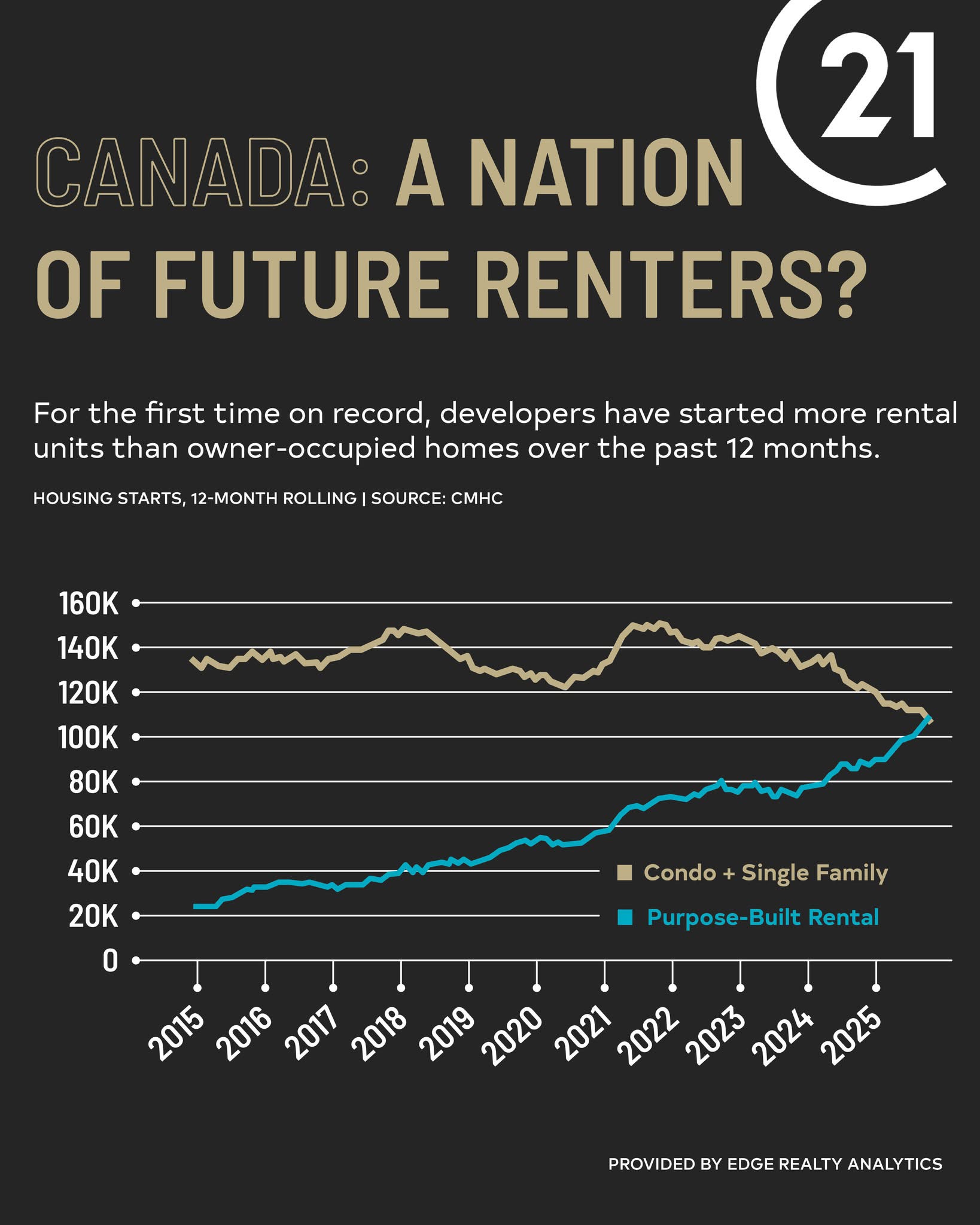
Canada’s rental housing landscape is undergoing a dramatic transformation. After decades of relatively modest activity, purpose-built rental construction has surged to levels not seen in over thirty years. This nationwide shift is reshaping how Canadians find housing, and Nova Scotia is very much part of this story.
This nationwide shift is reshaping how Canadians find housing, and Nova Scotia is very much part of this story.
The National Picture: Rentals Dominating New Construction
Across Canada, builders have pivoted heavily toward purpose-built rental apartments. These projects now dominate multi-unit construction starts, while condo development has cooled significantly. According to CMHC, rental apartment starts have taken an increasingly large share of total apartment construction as ownership-focused projects slow down.
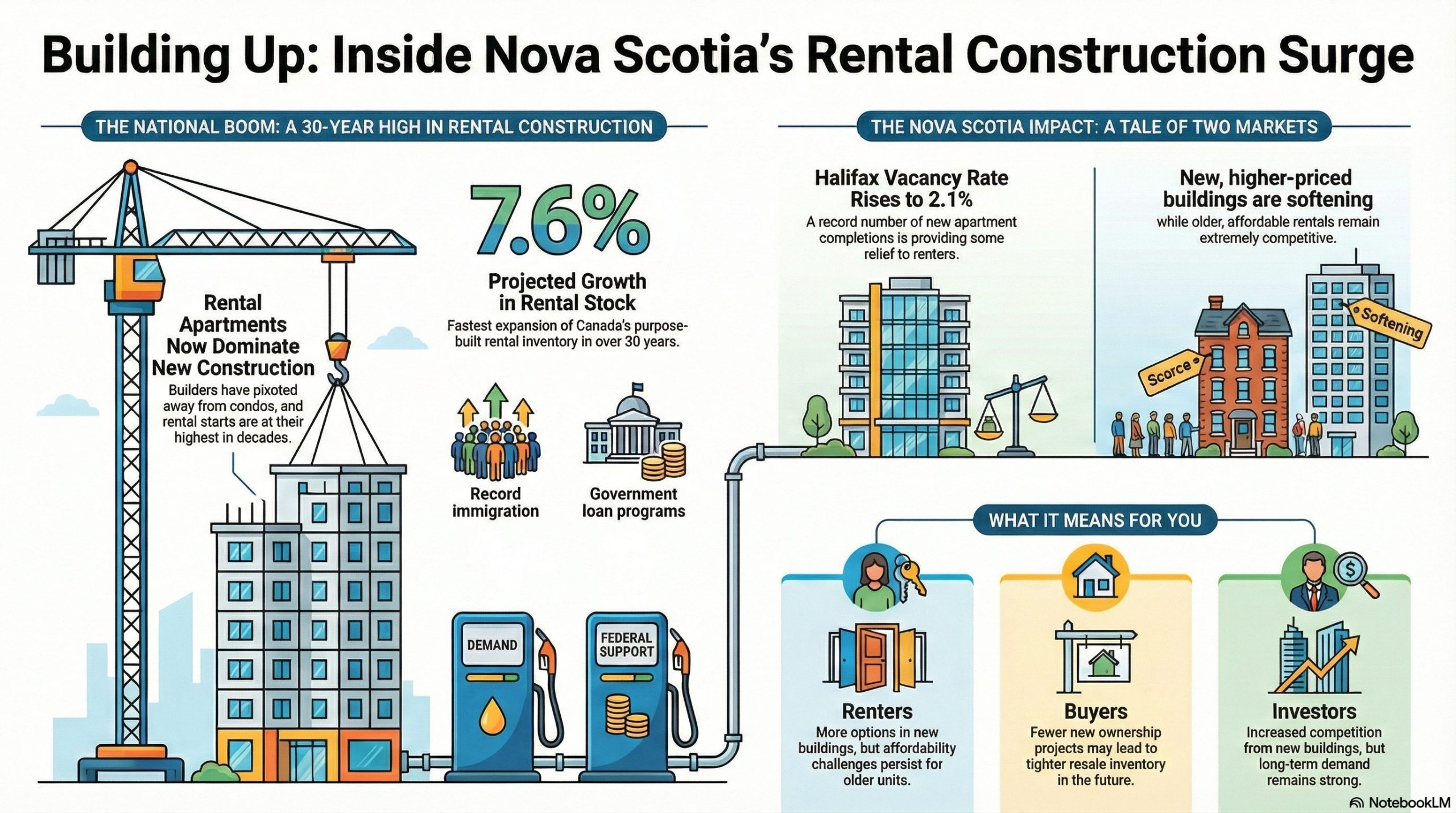
What’s driving this boom? Several factors are at play. Strong rental demand fueled by record immigration in recent years has created clear market signals for developers. Federal financing programs have also played a crucial role, with CMHC’s multi-unit loan insurance and the Apartment Construction Loan Program supporting an estimated 88% of new purpose-built rental starts in 2024.
The result is a multi-year pipeline of rental projects that CMHC expects will substantially lift the national rental inventory. Industry forecasts suggest Canada’s purpose-built rental stock could grow by approximately 7.6% over the coming years, representing the fastest expansion in more than three decades.
This surge in completions has begun to push vacancy rates up modestly from extremely low levels, though the market remains tight in most major centres. CMHC anticipates several more years of strong rental supply growth as projects currently under construction come online. As detailed in our recent analysis of Canada’s apartment market relief in 2025, vacancy rates are finally climbing across major cities after years of unprecedented tightness.
Nova Scotia’s Rental Construction Surge
Nova Scotia, particularly Halifax, has experienced its own rental construction boom. The province has seen record levels of new housing supply in recent years, with apartment construction making a particularly large contribution. This aligns with the broader trends we documented in our analysis of Halifax housing starts jumping 32% year-over-year.
The Halifax Partnership reports that 2024 brought a surge in apartment completions that helped bring the vacancy rate up to about 2.1%, a notable increase from the roughly 1% to 2% levels seen in previous years. CMHC’s mid-year rental update for 2025 notes that Halifax experienced its largest increase in housing supply on record in the first half of the year, with more than 1,000 units completed since January. Many of these are new purpose-built rentals.
Despite this progress, Nova Scotia’s housing needs assessment paints a sobering picture. Recent construction, while elevated, is still not enough to meet forecast demand. This underscores continued pressure on both rental and ownership markets across the province.
A Tale of Two Rental Markets
CMHC economists have identified an interesting dynamic in Halifax’s rental landscape. The market is essentially split between newer, higher-priced purpose-built buildings and older, more affordable stock.
The newer buildings are beginning to see some softening. In early 2025, advertised rents for new listings of purpose-built, two-bedroom units in Halifax were actually down about 4.2% year-over-year. This suggests that added supply is beginning to take some heat out of the top end of the market.
However, even as advertised rents for new units declined, overall average rents continued to rise. Why? Because older, more affordable rental stock remains extremely tight. Provincial analysis shows vacancy rates in Nova Scotia’s rental market fell to about 1% in 2022 and have only recently started to move up as more supply comes online.
This split creates a challenging situation. New supply is helping at the higher end of the market, but many local tenants are still feeling significant affordability pressure as competition remains fierce for older, more budget-friendly units. For more context on the broader affordability challenges facing Nova Scotians, see our piece on Nova Scotia’s housing affordability crisis.
What This Could Mean for Nova Scotia
The rental construction boom carries several implications for our housing market going forward.
For Renters:
The wave of new purpose-built rental completions, particularly in Halifax, should continue to provide relief from the extreme market tightness of recent years. Vacancy rates are climbing from historic lows, which gives renters more options and some improved bargaining power, especially when looking at newer buildings.
However, don’t expect dramatic across-the-board rent reductions. The older and more affordable segments of the rental market remain very tight. Most tenants will continue to face affordability challenges despite the new supply coming online. Understanding renters insurance requirements is also becoming increasingly important as more Nova Scotians rent.
Outside Halifax, many smaller Nova Scotia communities still face limited new supply and very low vacancy rates. The rental construction boom is not evenly distributed across the province.
For Buyers:
The heavy skew toward rental apartment construction has meant fewer new ownership-oriented projects, especially ground-oriented homes like townhouses and single-family developments. This could translate into leaner resale inventory in future years.
With new ownership supply constrained, well-located resale properties may face sustained demand. This dynamic could keep upward pressure on prices for ownership-style housing, particularly in desirable neighbourhoods and municipalities. Our Halifax-Dartmouth market statistics for 2025 show average home prices settling around $602,000 with healthy appreciation.
The provincial needs assessment indicates that at the current pace, overall construction (rental plus ownership combined) will not fully meet projected housing needs. This suggests both the rental and resale markets are likely to stay relatively tight over the medium term. Population trends, including Nova Scotia’s first quarterly population decline since 2020, may moderate demand somewhat but are unlikely to fundamentally shift the supply-constrained dynamics.
For Investors:
The purpose-built rental boom reflects strong fundamentals in the rental market, but it also means more competition for landlords. As newer, amenity-rich buildings come online, older rental properties may need to compete more aggressively on price or upgrades. Understanding Canada’s changing investment property mortgage rules is crucial for investors planning purchases in today’s market.
At the same time, Nova Scotia’s continued population growth and housing shortfall suggest rental demand will remain robust for years to come. Well-maintained properties in good locations should continue to attract tenants, though investors should be prepared for a more competitive landscape than in recent years.
Looking Ahead
Canada’s purpose-built rental construction boom represents a significant shift in how the country is addressing its housing challenges. Nova Scotia is benefiting from this trend, particularly in Halifax, where new supply is beginning to ease what was an exceptionally tight market.
However, challenges remain. Construction is still not keeping pace with forecast housing needs. The rental market remains split between newer, pricier stock and older, more affordable units that are still extremely difficult to find. And the focus on rental construction has meant less new supply for prospective homebuyers. Regional markets like District 104 (Truro, Bible Hill, and Stewiacke) continue to show different dynamics than the Halifax core.
As always, conditions vary significantly across Nova Scotia. Halifax is experiencing the most immediate impact of new rental construction, while many smaller communities continue to grapple with limited supply and very low vacancy rates. Major projects like Bible Hill’s $1 billion housing development demonstrate that transformative change is coming to communities beyond Halifax, though it will take years to fully materialize.
Whether you’re renting, buying, or investing in Nova Scotia real estate, understanding these broader trends can help you make more informed decisions in today’s evolving market. If you have questions about how these dynamics are affecting your specific situation or community, I’m always happy to discuss what we’re seeing on the ground.
About the Author: Rob Lough is a Broker/Owner and Realtor® at Century 21 Optimum Realty, serving the Halifax Regional Municipality, East Hants, and Truro markets. With 24 years of experience in Nova Scotia real estate, Rob provides expert guidance to buyers, sellers, and investors navigating the province’s evolving housing market.