Facebook
 X
X
 Pinterest
 Copy Link
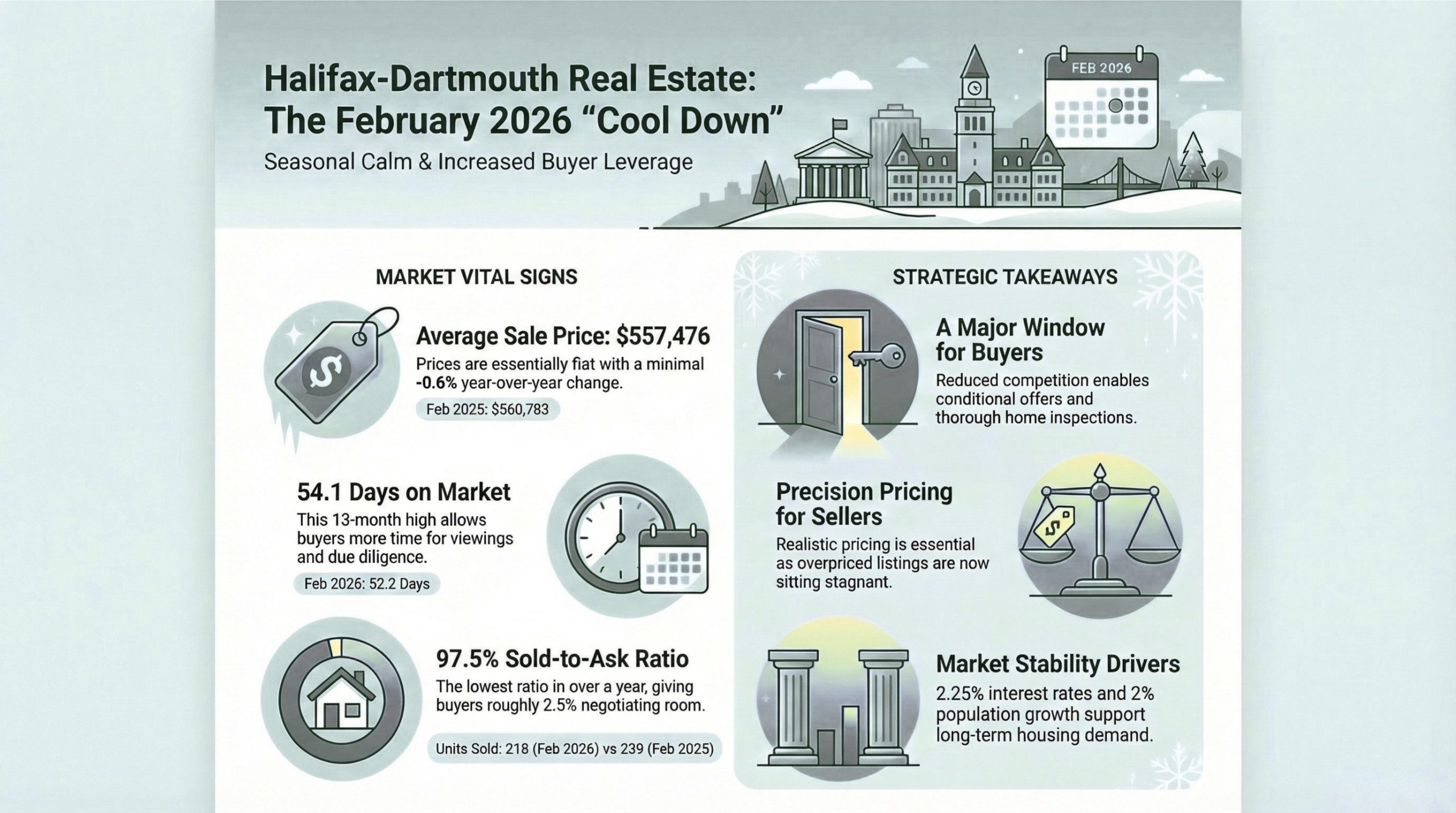
Halifax-Dartmouth Real Estate Market Stats February 2026
By Rob Lough, Broker/Owner – Century 21 Optimum Realty Published: March 2026
February 2026 is in the books, and the Halifax-Dartmouth real estate market is painting a picture of seasonal calm with underlying stability. If you’ve been following along since my January 2026 market stats update, the trends we identified last month have continued. Prices remain resilient, but transaction volumes, days on market, and negotiation dynamics all reflect a cooler, more balanced environment heading into spring.
For context on where the broader market has been, my Spring 2026 Halifax market guide and the 2025 year-end summary both provide a useful foundation for understanding what’s happening right now.
Here’s a full breakdown of the February 2026 market stats for the Halifax-Dartmouth region (not including vacant land).
Number of Units Sold
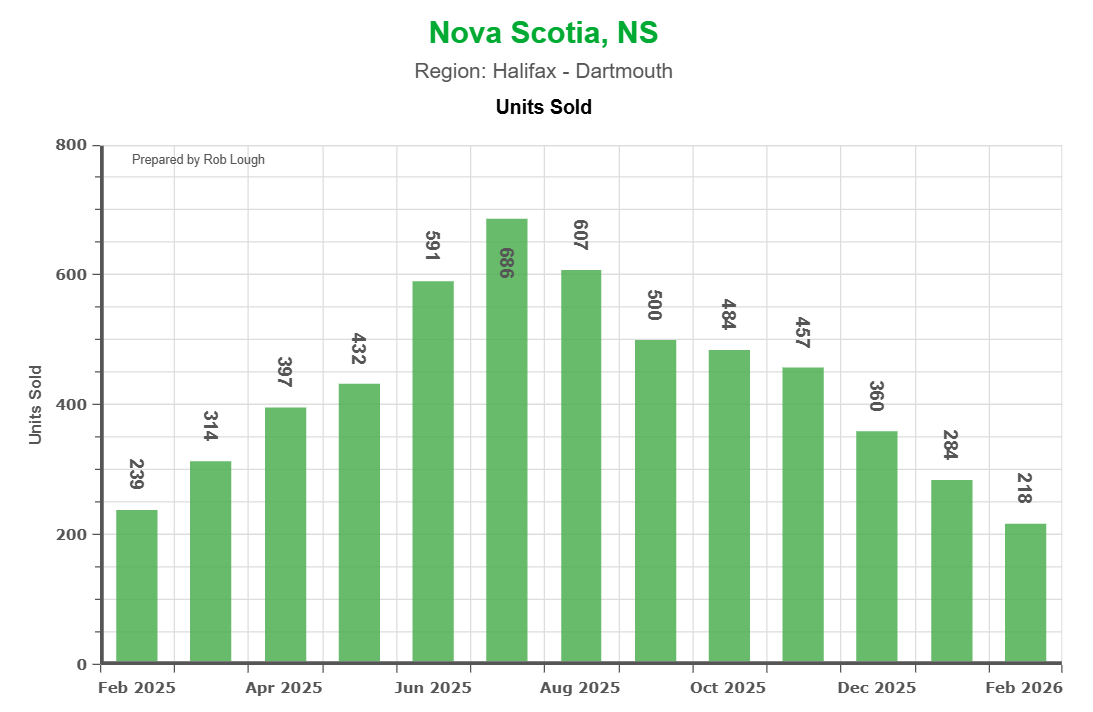
Halifax-Dartmouth recorded 218 residential sales in February 2026. That’s down from 284 in January and below the 239 units sold in February 2025, representing roughly a 5% year-over-year decline in transaction volume.
number of units sold Halifax-Dartmouth Real Estate Market Stats February 2026
This is the lowest sales figure in the trailing 13-month window and follows the familiar seasonal pattern we’ve seen play out consistently over the past year. Activity peaked at 686 units in July 2025, then steadily declined through the fall and winter months. February has always been a quiet month in Nova Scotia’s real estate calendar, and this year is no exception.
For buyers, this kind of low competition environment creates real opportunity. Fewer active buyers in the market means less pressure on offers, more time to conduct due diligence, and greater leverage in negotiations. If you’re getting pre-approved and positioning yourself to act, February’s quieter conditions could work in your favour.
Average Price of Sold Homes
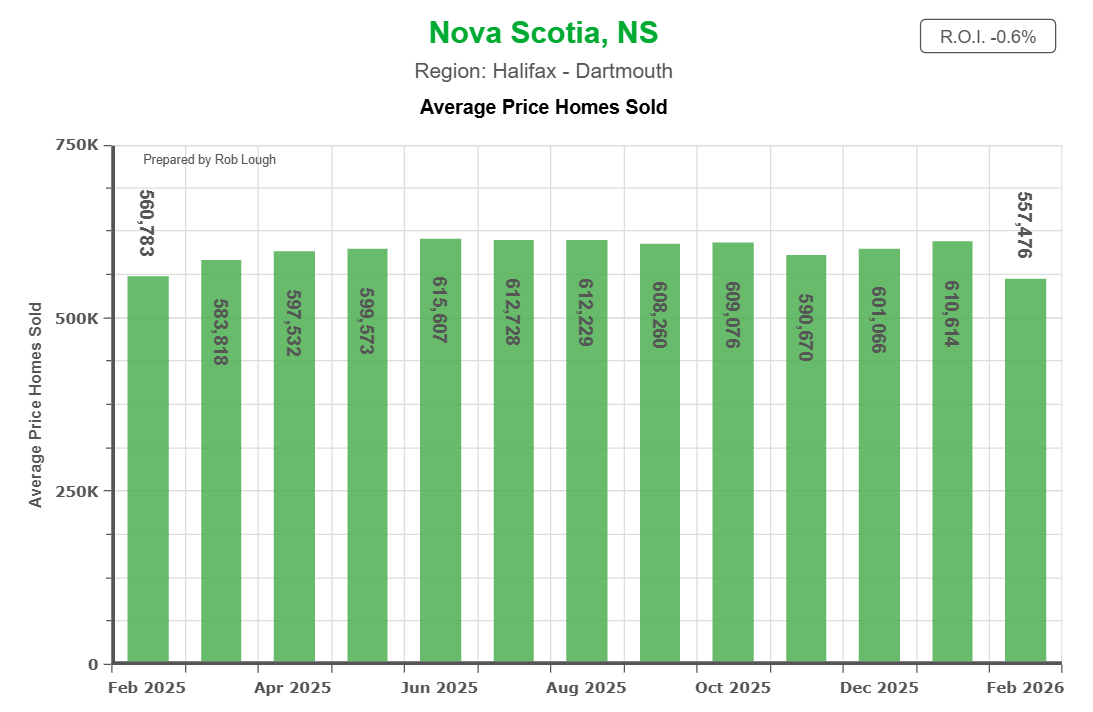
The average sale price in February 2026 came in at $557,476, reflecting a year-over-year return on investment of -0.6% compared to February 2025’s $560,783. This is essentially flat pricing on a 12-month basis, and while the negative ROI is technically the first we’ve seen in this data set, the margin is minimal.
Average Price of sold homes Halifax-Dartmouth Real Estate Market Stats February 2026
To put this in perspective, prices climbed steadily from the February 2025 low through the spring, reaching the $610,000–$615,000 range during the summer and fall plateau. The February 2026 figure of $557,476 is the lowest monthly average since February 2025, and it reflects a combination of seasonal softening, a shift in the mix of properties selling during winter months, and the reality that fewer high-value transactions tend to close in February.
For sellers, this is not a reason to panic. The annual average for 2025 settled around $602,000, and values held remarkably steady across most of the year. The February dip is consistent with seasonal patterns rather than a structural decline. Your home’s value has not collapsed.
For buyers, a -0.6% year-over-year reading signals that the rapid appreciation era has cooled. This is a healthy development for anyone entering the market, and it reinforces that Halifax-Dartmouth real estate remains a solid long-term play without the speculative frenzy that defined earlier years. If you want to understand how lenders assess property values in this environment, my guide on bank appraisals vs. real estate CMAs is a useful companion read.
Value of Sold Homes
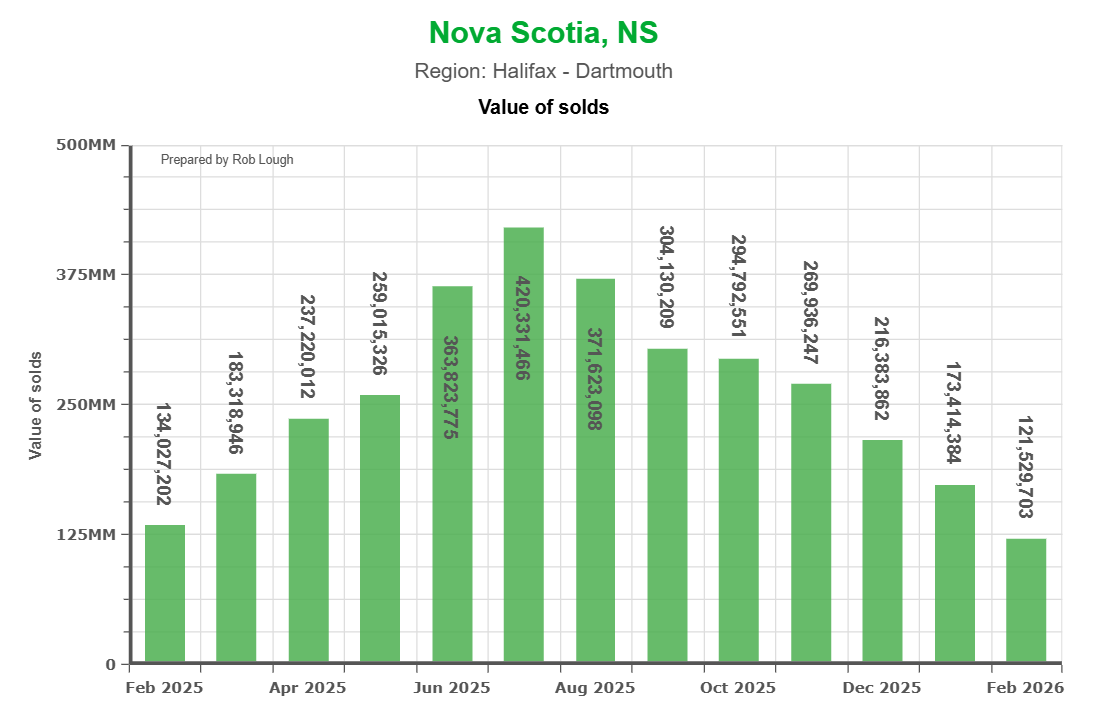
The total dollar value of homes sold in February 2026 was $121,529,703. That’s down from $173,414,384 in January and represents the lowest monthly total sales volume in the past 13 months.
Value of sold homes Halifax-Dartmouth Real Estate Market Stats February 2026
This metric tracks closely with units sold. Fewer transactions naturally mean less total dollar volume, even when prices hold relatively firm. The summer peak of $420,331,466 in July 2025 feels like a distant memory, but the seasonal pullback here is completely normal for our region. Total volume will climb again as we move into spring and summer activity picks up.
If you’re watching the bigger picture on affordability and financing, my article on Nova Scotia’s housing affordability crisis offers additional context on the forces shaping these numbers.
Average Days on Market
Average days on market in February 2026 climbed to 54.1 days, the highest reading in the trailing 13-month window. That’s up from 52.6 in January and significantly higher than February 2025’s 52.2 days.
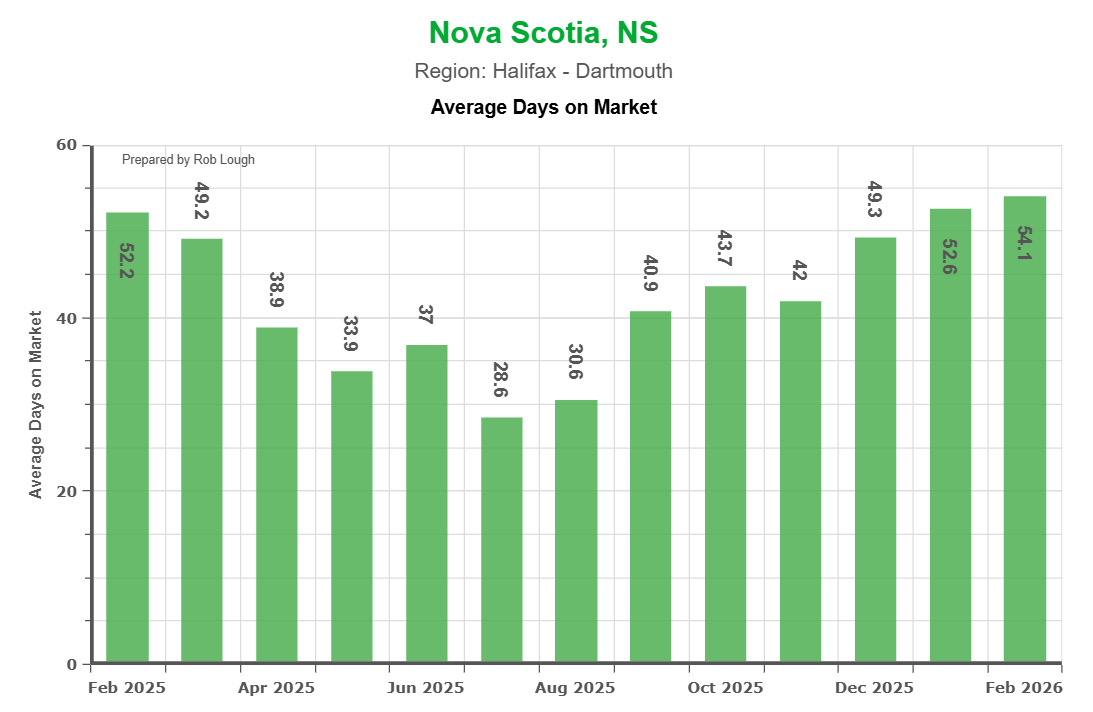
Average Days on Market Halifax-Dartmouth Real Estate Market Stats February 2026
This is the clearest indicator of where the market sits right now. During the spring and summer of 2025, homes were selling in as little as 28.6 days (July) to 33.9 days (May). The steady climb from those levels through the fall and winter tells an important story: the Halifax-Dartmouth market has moved from a pace where buyers had to act immediately to one where they can take a more measured approach.
At 54 days, listings are still moving within roughly two months, which is consistent with a balanced to slightly buyer-leaning market. This is not distressed territory by any measure.
For sellers, this means pricing strategy matters more than ever. Overpriced listings will sit, and every extra week on market erodes buyer confidence in the property. Working with an experienced agent who understands current pricing dynamics is critical. If you’re planning a spring listing, I’ve outlined why accepting offers only from pre-approved buyers protects your sale from falling apart due to financing issues.
For buyers, the extra time is a welcome change from the conditions that dominated 2021 through mid-2025. You have room to book second viewings, arrange a home inspection, and negotiate conditions without the pressure of competing offers. This is the kind of environment where informed, prepared buyers can find real value.
Average Sold to Ask Ratio
The sold-to-ask ratio in February 2026 dropped to 97.5%, down from 97% in January and the lowest reading in the past 13 months. During the spring and summer of 2025, this ratio was consistently at or above 99%, with June and July hitting 100.1% and 100.5% respectively as bidding activity pushed sale prices above list.
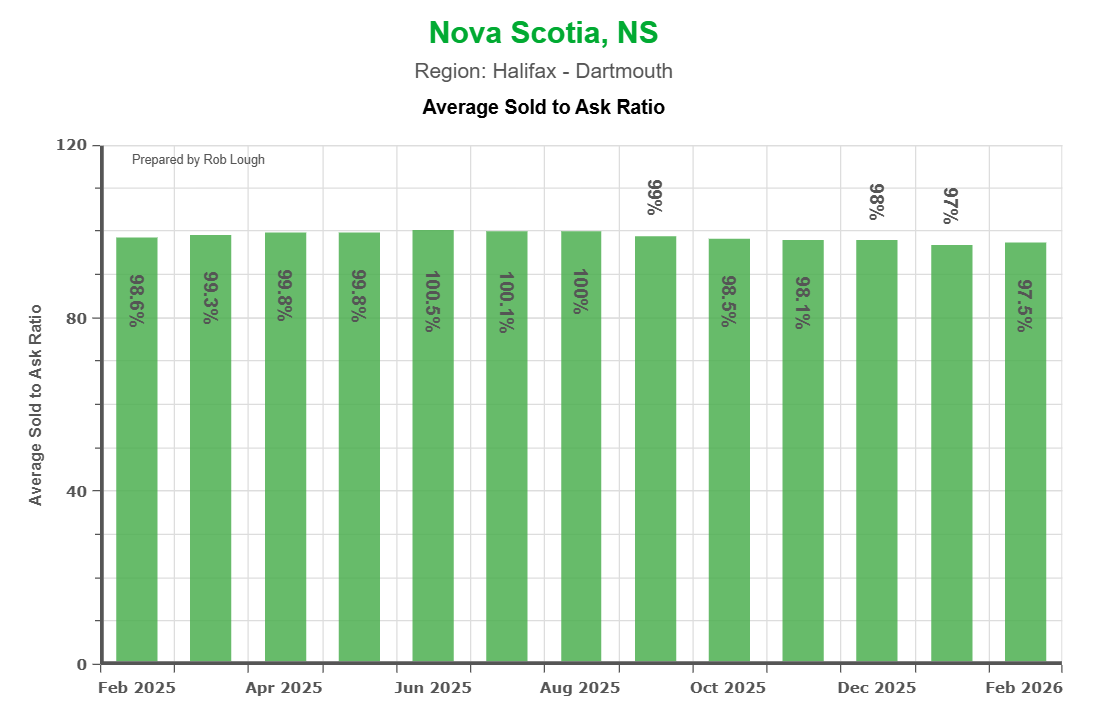
Average sale to ask ratio Halifax-Dartmouth Real Estate Market Stats February 2026
A 97.5% ratio means the average buyer is negotiating approximately 2.5% below asking price. On a $550,000 home, that’s roughly $13,750 in savings off list price. That’s meaningful, and it represents the strongest negotiating position buyers have had in our market in well over a year.
For buyers, this creates a window to submit conditional offers, negotiate on price, and potentially secure concessions on closing costs or repairs. If you’re still in the early stages of your homebuying journey, understanding your GDS and TDS ratios will help you know exactly how much you can afford before you start shopping.
For sellers, a sub-98% ratio means realistic pricing from day one is essential. The days of testing the market with an inflated asking price and waiting for a bidding war are behind us, at least for now. Homes that are priced correctly for current conditions are still selling. Homes that are priced for last summer’s market are sitting.
What’s Driving These Numbers
Several forces are shaping the Halifax-Dartmouth market heading into spring 2026:
Interest rates remain stable. The Bank of Canada’s decision to hold the overnight rate at 2.25% has provided predictability for both buyers and sellers. Variable-rate borrowers aren’t seeing payment shock, and fixed-rate products have settled into a manageable range. This stability supports continued activity without sparking a return to the urgency we saw during the rapid rate-cutting cycle.
Population growth continues to support demand. As I covered in my recent article on how population growth is shifting west, Halifax is sitting at roughly 2% annual growth, well above Toronto and Vancouver. That steady inflow of people keeps baseline housing demand intact, even during seasonally slow months.
Inventory is improving. More listings are hitting the market compared to a year ago, and the purpose-built rental construction boom is gradually easing pressure on the broader housing market. The result is a more balanced environment where buyers have choice and sellers need to compete for attention.
Affordability remains a challenge for first-time buyers. With average prices still in the high $500K range, breaking into the Halifax market requires planning. Programs like Nova Scotia’s 2% down payment program and understanding your full closing costs are essential steps for anyone entering the market for the first time. If you’re in that position, my article on how first-time buyers in Canada face a tougher climb than past generations provides practical strategies worth reading. New province-wide NSAR research backs this up 77% of Nova Scotians say housing in their area is unaffordable, with aspiring owners the most concerned of any group surveyed.
What This Means for Buyers and Sellers
For sellers: February’s data confirms what we’ve been seeing since the fall. Your home’s value is still strong. The average price has dipped seasonally but remains consistent with the broader 12-month trend. However, longer days on market and a sold-to-ask ratio below 98% mean you need to be precise on list price, invest in presentation, and plan for a longer marketing timeline than you would have needed in mid-2025. The good news? Well-priced homes are still selling. Overpriced homes are not. Work with an agent who understands the difference.
For buyers: This is the most favourable buying environment in Halifax-Dartmouth since before the pandemic-era frenzy. You have more time, more choice, and more leverage than at any point in the past three years. The combination of 54+ days on market, a 97.5% sold-to-ask ratio, and stable prices creates a window for conditional offers, thorough inspections, and negotiated discounts. Get pre-approved now so you’re ready to act with confidence when the right property comes along. And remember: don’t finance anything between your mortgage approval and closing day.
Looking Ahead to Spring 2026
If the seasonal patterns of 2025 repeat, and there’s every reason to expect they will, we should see transaction volumes, prices, and market pace all pick up as we move into April and May. The question is whether the spring market will rebound to the intensity of 2025 or settle into a more moderate pattern.
My expectation is somewhere in between. Stable interest rates, continued population growth, and improving inventory all point to a healthy spring market. But the era of automatic over-ask sales and sub-30-day selling timelines appears to be behind us, replaced by a more thoughtful market where preparation, pricing, and professional guidance matter more than ever. The April 2026 Halifax-Dartmouth market stats are now live, see how the spring numbers compare.
If you’re thinking about buying or selling in Halifax-Dartmouth this spring, now is the time to start planning. Connect with me at roblough.c21.ca to discuss your strategy.
Rob Lough is a Broker/Owner and REALTOR® at Century 21 Optimum Realty, serving the Halifax Regional Municipality, East Hants, and Truro markets. With 25 years of Nova Scotia real estate experience, including 5 years as a licensed Home Inspector, Rob brings a uniquely grounded perspective to buying, selling, and market analysis.
Related Resources
- Halifax-Dartmouth Real Estate Market Stats – January 2026
- Spring 2026 in Halifax: Your Complete Market Guide
- Bank of Canada Holds Overnight Rate at 2.25%
- Population Growth Is Shifting West – What It Means for Halifax
- Why Getting Pre-Approved Is the Smartest First Step
- GDS vs TDS Ratios: Your Complete Guide to Mortgage Qualification
- Closing Costs When Buying in Nova Scotia
- Nova Scotia’s 2% Down Payment Program
- Nova Scotia Property Assessments: What Rising Values Mean for Homeowners
- Truro-Bible Hill Real Estate Market Stats – January 2026
- Halifax-Dartmouth Real Estate Market Stats – April 2026